Power banks have become essential tools for anyone who relies on mobile devices. They provide backup power when outlets are not available, such as during travel, work, or outdoor activities. A good power bank should charge your phone or tablet quickly and safely without adding too much weight to your bag. In 2026, advances in technology have made power banks smaller, faster, and more efficient. However, not all models are created equal. Some offer high capacity but slow charging, while others focus on portability at the cost of power. To find the right one, you need to understand the core features that affect performance.
This article will explain each aspect in detail, helping you make an informed choice based on your daily needs. Whether you’re a frequent traveler or just need emergency backup, knowing these elements ensures you get a device that lasts and performs well.
Many people buy power banks based on price alone, but that can lead to poor quality and safety issues. Instead, focus on factors like battery capacity, output power, and build materials. For example, a power bank with proper safety certifications prevents overheating and protects your devices. We’ll cover how to spot these features and avoid common mistakes. By the end, you’ll have a clear idea of what separates a basic charger from a top-quality one. This guide draws from current trends and expert recommendations to give you practical advice.
Understanding Power Bank Capacity
Capacity is one of the most important features of a power bank. It tells you how much energy the device can store and deliver. Measured in milliampere-hours (mAh), this number shows the potential charges for your gadgets. For instance, a 10,000 mAh power bank can typically charge a standard smartphone with a 4,000 mAh battery about two times. However, real-world results vary due to energy loss during transfer, which can be around 20-30%. Always check the rated capacity against your device’s needs. If you use a tablet or laptop, aim for higher capacities like 20,000 mAh or more to get multiple charges.
Choosing the right capacity depends on your lifestyle. For light users who just need a quick top-up during the day, a 5,000-10,000 mAh model works well. These are compact and easy to carry in a pocket. Power users with multiple devices or long trips should go for 20,000 mAh or above. These provide enough juice for several phones or even a partial laptop charge. Keep in mind airline rules: most allow up to 100Wh, which equals about 27,000 mAh at 3.7V. Calculate Wh by multiplying mAh by voltage and dividing by 1,000. This ensures your power bank is travel-friendly without restrictions.
Higher capacity doesn’t always mean better value. Larger units are heavier and bulkier, which might not suit everyone. Look for efficiency ratings—good power banks convert 80-90% of stored energy effectively. Brands like Anker often list this info. Test capacity by charging known devices and tracking usage. Avoid cheap models claiming unrealistically high mAh in tiny sizes, as they often underdeliver. Prioritize verified specs from trusted makers for reliable performance.
Charging Speed and Output Power
Charging speed determines how fast your devices get powered up. It’s measured in watts (W), calculated by multiplying voltage (V) and amperage (A). A good power bank supports at least 18W for quick charging. For example, USB Power Delivery (PD) allows up to 100W or more, ideal for laptops. Quick Charge (QC) from Qualcomm speeds up Android devices. Match the power bank’s output to your gadget’s input for best results. If mismatched, charging slows down significantly.
Look for models with multiple output levels. Some adjust automatically based on the connected device, preventing damage. In 2026, many power banks offer 45W or higher for phones and tablets. This can charge a phone from 0 to 50% in under 30 minutes. For laptops, seek 65W+ with USB-C PD. Test speed by timing charges on your devices. Factors like cable quality affect performance—use certified cables for optimal rates.
Recharge time for the power bank itself matters too. Fast input charging, like 30W PD, refills a 10,000 mAh unit in about two hours. Without it, recharging can take overnight. Pass-through charging lets you power devices while the bank recharges, useful for desks. Avoid low-wattage models if you need speed; they frustrate during emergencies. Top picks like the Anker 737 offer 140W output, making them versatile for various gadgets.
Types of Ports and Connectivity
Ports are the connection points that link your power bank to devices. Common types include USB-A, USB-C, and sometimes micro-USB for input. USB-C is the most versatile in 2026, supporting both input and output with high speeds. A good power bank has at least two ports: one USB-C for fast charging and one USB-A for older devices. Multiple ports allow charging several gadgets at once, but total output power splits among them.
Wireless charging adds convenience by eliminating cables. Look for Qi-compatible models that support 15W or more. Magnetic options like MagSafe work well with iPhones, snapping securely for stable charging. Built-in cables, seen in models like the Iniu P50-E1, reduce the need to carry extras. They often include a USB-C lanyard that’s durable and retractable. Check port durability—good ones withstand thousands of insertions without loosening.
Number of ports affects usability. Three or four ports suit families or multi-device users. Ensure the power bank supports protocols like PD and QC across ports. For laptops, confirm USB-C with enough wattage. Avoid single-port models unless portability is key. Test compatibility with your cables and devices before buying. This feature makes a power bank adaptable to future tech changes.
Battery Type and Quality
The battery inside a power bank impacts its lifespan and performance. Most use lithium-ion (Li-ion) or lithium-polymer (Li-po) cells. Li-ion is common, offering high energy density and low cost. Li-po is flatter and lighter, ideal for slim designs. Choose models with cells from reputable makers like Samsung or LG for better reliability. Quality batteries maintain capacity over 500-1,000 cycles, losing only 20% efficiency.
Efficiency is key—good power banks deliver 80-90% of rated capacity. Losses occur from heat and conversion. Check for temperature control to prevent degradation. In hot climates, opt for Li-po as it handles heat better. Avoid recycled or low-grade cells in cheap units, which fail quickly and pose risks.
Cycle life tells how many full charges the bank can handle before dropping below 80% capacity. Premium models last longer with smart management chips. Look for indicators showing battery health. For heavy use, invest in high-quality cells to save money long-term. This ensures consistent performance without sudden failures.
Build Quality and Design
Build quality affects how well a power bank holds up to daily use. Look for sturdy materials like aluminum or high-grade plastic that resist drops and scratches. Soft-touch coatings improve grip and reduce fingerprints. Weight and size matter for portability—a good 10,000 mAh unit weighs around 200g and fits in a pocket. Larger capacities add bulk, so balance needs with carry comfort.
Design features like stands or loops enhance usability. The Anker MagGo has a flip-out stand for viewing while charging. Water resistance, rated IPX4 or higher, protects against splashes. For outdoor use, rugged models with rubberized edges withstand impacts. Check seams and buttons for solid construction—no loose parts.
A slim profile makes it easy to slip into bags. Colors and aesthetics appeal to style-conscious users. Durable builds last years, justifying higher costs. Test by reading user reviews on wear over time. Good design combines function with form for practical, long-lasting use.
Essential Safety Features
Safety features protect both the power bank and your devices. Overcharge protection stops power flow when full, preventing battery swell or fire. Overheat sensors adjust output to keep temperatures safe. Short-circuit prevention cuts power if wires touch metal. Look for multi-layer protections in quality models.
Certifications confirm safety. UL tests for fire and shock risks. CE and FCC ensure compliance with standards. RoHS limits harmful substances. Buy certified products to avoid fakes. Risks from poor units include explosions or device damage from unstable voltage.
Automatic cutoff and low-current modes add safety for small gadgets like earbuds. Trusted brands offer warranties covering defects. For air travel, stay under 100Wh. Prioritize safety to avoid accidents and extend lifespan.
Additional Features for Better Usability
Extra features can make a power bank stand out. LED displays show exact battery percentage, voltage, and current. This helps track usage accurately. Built-in flashlights aid in low-light situations, useful for camping.
Solar panels allow recharging from sunlight, great for outdoors. Though slow, they provide emergency power. Magnetic attachments secure phones for wireless charging without slips.
Low-power modes charge wearables efficiently without waste. Some models include AC outlets for broader use. Choose based on needs—these add value without bulk.
How to Choose the Right Power Bank
Assess your devices and usage. List battery sizes and count daily charges needed. For phones only, 10,000 mAh suffices. Multi-device users need more.
Budget matters—spend on reputable brands for longevity. Read reviews for real performance. Compare specs like wattage and ports.
Test in-store if possible. Consider warranty and support. Match to lifestyle: compact for commutes, rugged for adventures.
Common Mistakes to Avoid
Don’t chase the cheapest option—they often lack safety and underperform. Ignore exaggerated mAh claims in tiny packages; physics limits capacity.
Skip checking compatibility—ensure ports and protocols match your devices. Avoid ignoring weight; heavy units become burdensome.
Neglect recharging speed; slow input frustrates. Buy from trusted sellers to dodge counterfeits.
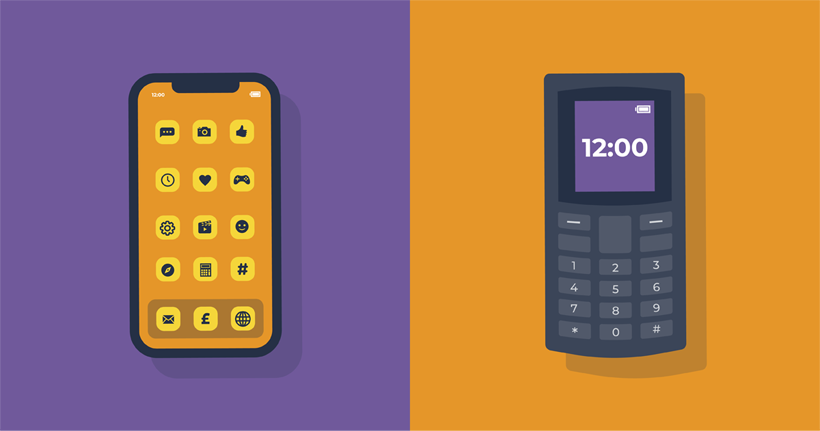
To see how device type impacts features and usage, check out our guide on Smartphone vs Feature Phone, which explains key differences, pros, cons, and who each option suits best.
Conclusion
A good power bank combines capacity, speed, safety, and design to fit your life. By focusing on these features, you get reliable power without issues. Research and choose wisely for lasting satisfaction.